Intended audience: users
AO Easy Answers: 4.5
Overview
Whenever a question is asked, Easy Answers will start the process of interpreting the question and generating a query that will be sent to the underlying database(s) in order to retrieve the data to answer the question. An animation appears on the screen showing the steps along the way.
What Happens During Processing
It’s important to understand how Easy Answers will interpret the user’s question.
Interpretation Modes
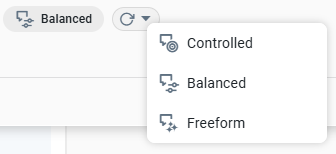
When the AO Platform processes a question, it can use one of three different Interpretation Modes. These modes determine the levels of certainty/accuracy the answers will have based on how the generative AI Large Language Model is being instructed to do certain operations:
-
Controlled - enforces strict validation against the enterprise semantic layer, ensuring responses align precisely with defined data structures. Unknown or ambiguous words or phrases are shown to the user. Questions will fail if they cannot be validated, and the user will have to rephrase the question.
-
Balanced - provides guided flexibility, prompting clarification when needed while maintaining alignment to enterprise definitions. Users will be asked to clarify unknown or ambiguous words before a response can be generated.
-
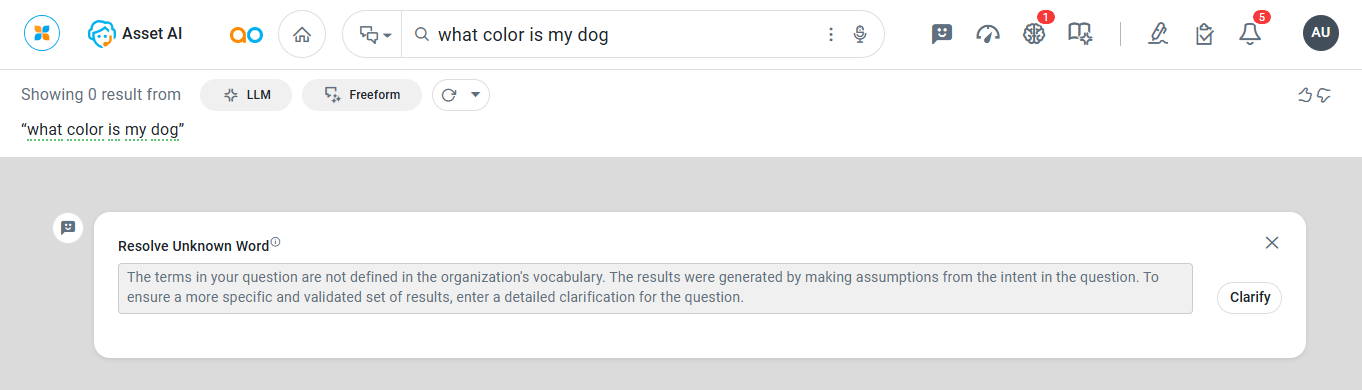
Freeform - allows more exploratory reasoning, enabling the LLM to interpret the user questions with a greater degree of freedom. The LLM interpretation of questions will make assumptions where necessary to auto-resolve unknown or ambiguous words to produce a response; However, the user will also be able to provide additional clarifications where needed, which will further refine the results already provided.
Every Easy Answers solution has a default Interpretation Mode selected at the Ontology level (Balanced), and business users typically cannot change the selected mode. However, power users with granted permissions to change these modes will see options to do so once a question has been answered (using the initial default mode). Power users will see an extra dropdown option on the Retry icon, which allows them to switch to a different Interpretation Mode.
When a Question is Not Understood
The scenarios and options explained below will, in most cases, help the user move forward; however, the clarifications provided by the user will not immediately and permanently enrich the solution ontology. Questions that require clarification(s) will be logged for review by administrators with permissions to update the ontology permanently based on feedback from users. See Easy Answers - Reviewing Feedback for LLM-Based Questions.
Questions With Ambiguous Word(s)
If a question includes one or more terms that are ambiguous in nature, ie can be interpreted in more than one way, Easy Answers will provide a clarification message to make it clear what is ambiguous and suggest next steps.
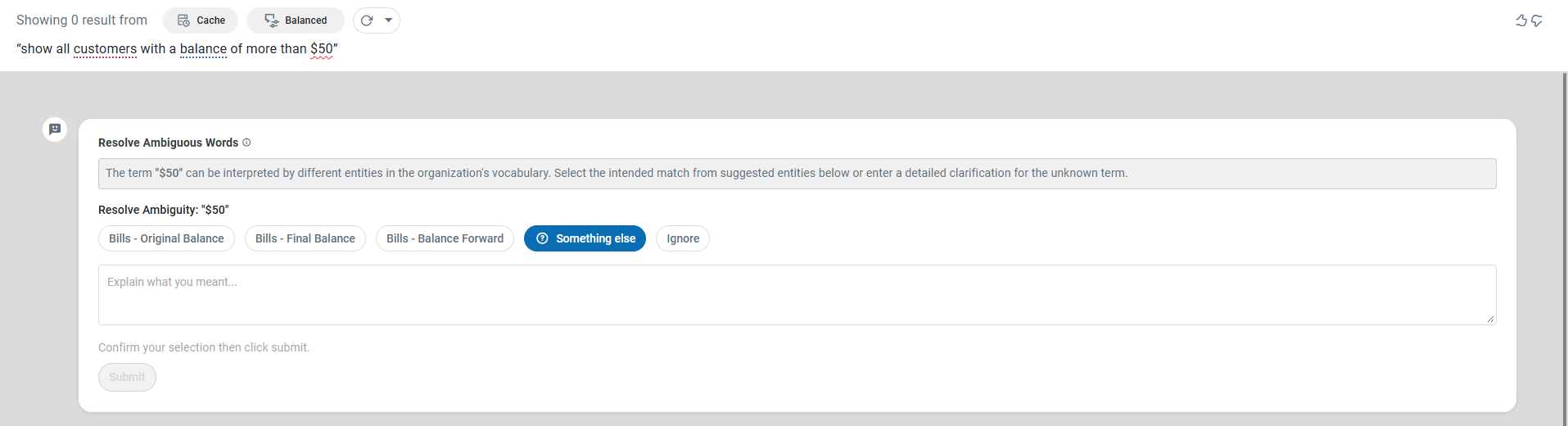
Below is an example of the user asking a question using the word “$50”, which is ambiguous to the system.

Depending on the Interpretation Mode, the system will respond in different ways:
Controlled
-
The user will be presented with a clarification message, but because the interpretation is done in Controlled mode, the user will not be presented with options to select topics and fields, or even provide a manual clarification text. Instead, the user can either try rephrasing the original question, or try any previous questions from History. Only strictly validated questions will be accepted in this mode.

Balanced
-
The user will be requested to select from the options of topics and fields that shall be used for the meaning of the ambiguous word. Alternatively, the user can click Something Else to provide a manual clarification, or even click Ignore to resolve the ambiguous term. If more terms are ambiguous, the user will continue to be asked to resolve. Once all is done, click Submit to retry the question. No results will be provided until all clarifications are resolved.
Freeform
-
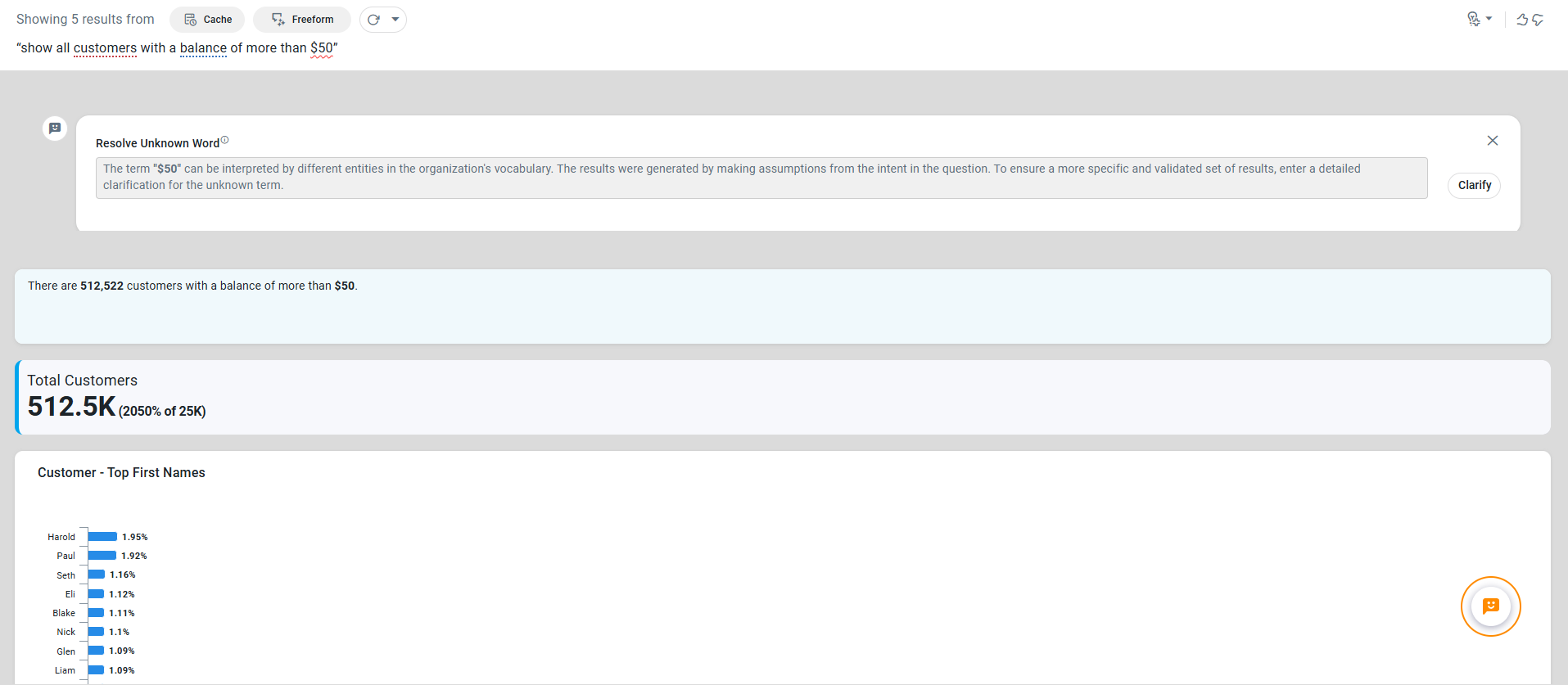
The user will be presented with the same options as in Balanced mode; However, in Freeform mode, the interpretation of the question will also make assumptions about the ambiguous word and the original intent of the question. This often results in more data being retrieved. The user can provide clarification to reduce the results to be more specific and validated based on the user’s clarifying input.
Questions With Unknown Word(s)
If a question includes one or more terms that are unknown to the ontology, Easy Answers will provide a clarification message to make it clear what is unknown and suggest next steps.
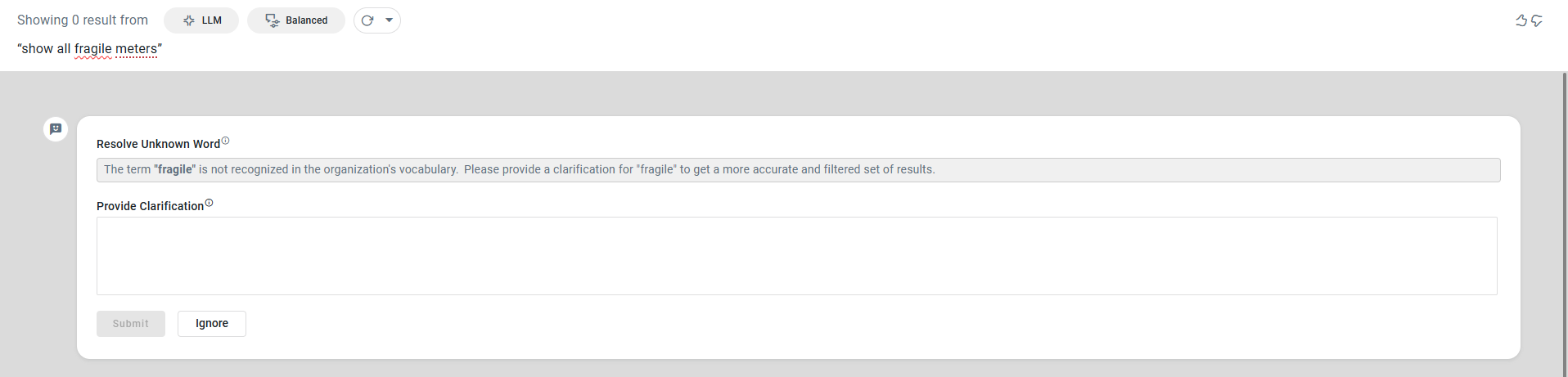
Below is an example of the user asking a question using the word “fragile”, which is unknown to the system.

Depending on the Interpretation Mode, the system will respond in different ways:
Controlled
-
The user will be presented with a clarification message, but because the interpretation is done in Controlled mode, the user will not be presented with the option to provide a manual clarification text. Instead, the user can either try rephrasing the original question or try any previous questions from History. Only strictly validated questions will be accepted in this mode.

Balanced
-
The user will be requested to provide a manual clarification text for the unknown term. If more terms are unknown, the user will continue to be asked to resolve. Once all is done, click Submit to retry the question. No results will be provided until all clarifications are resolved.
Freeform
-
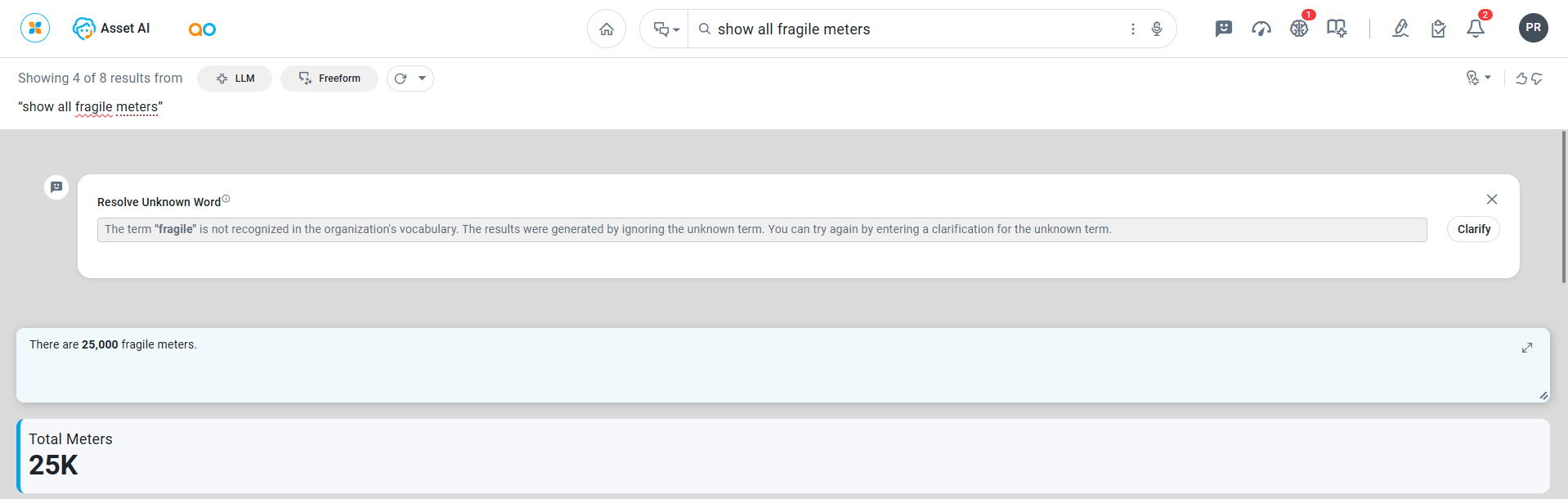
The user will be presented with the same options as in Balanced mode; However, in Freeform mode, the interpretation of the question will also make assumptions about the unknown word and the original intent of the question. This often results in the unknown word being ignored and more data being retrieved. The user can provide clarification to reduce the results to be more specific and validated based on the user’s clarifying input.
The Question Cannot Be Understood At All
-
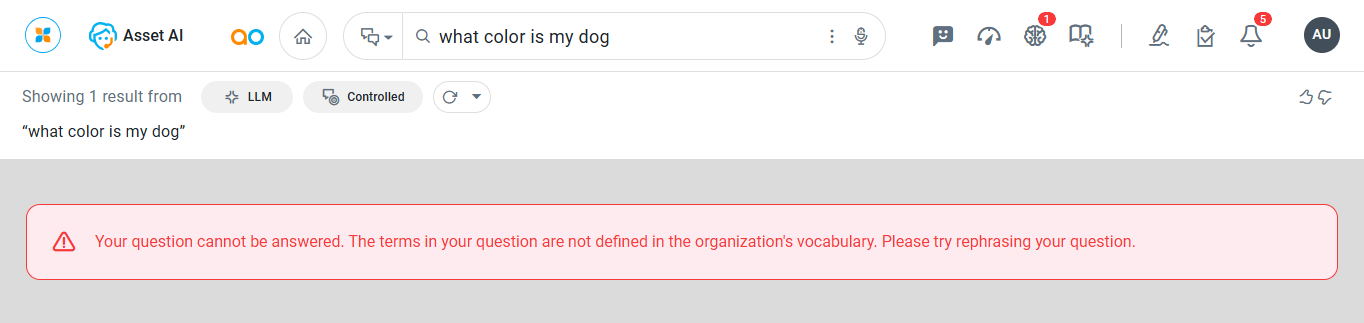
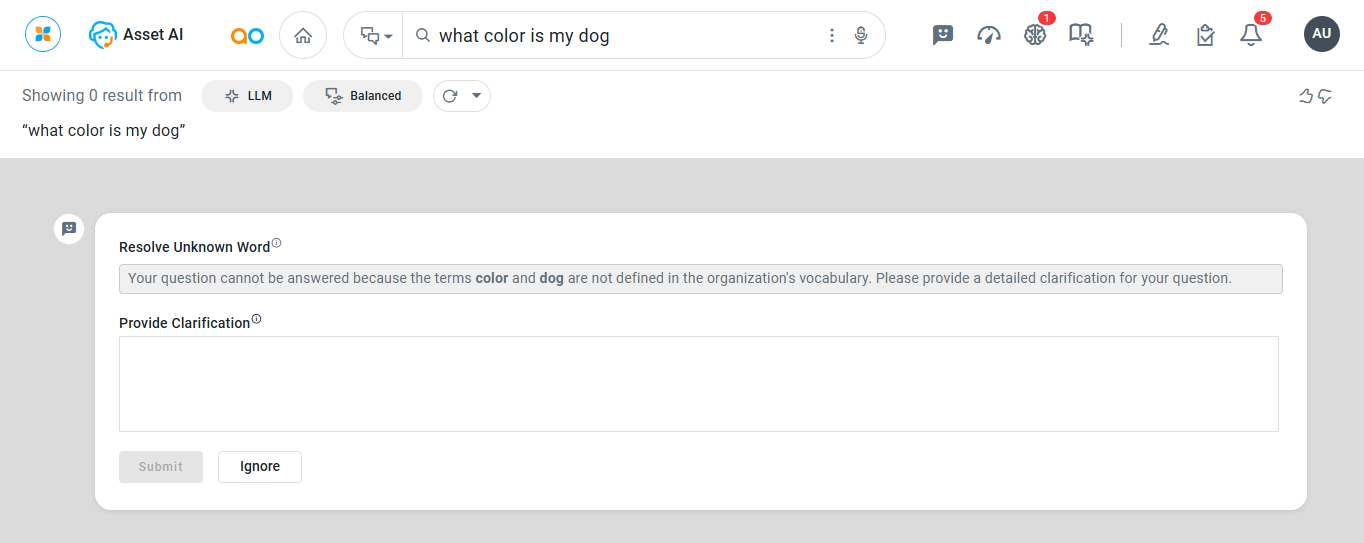
If a question is entered that just doesn’t make sense to the ontology, ie, no Topics or Topic Properties are recognized, then the Clarification text box shows up (in Controlled mode), or the option to provide a clarification (in Balanced and Freeform modes). In such cases, however, it may be easier to simply ask another question!
Controlled
Balanced
Freeform
-
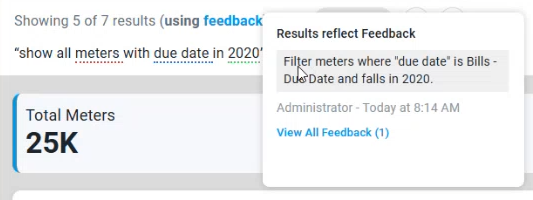
When clarification(s) have been provided, the results page being generated will show that Feedback has been provided
Contact App Orchid | Disclaimer